
Energy cooperative representing more than 800 Amsterdam residents will store solar power generated on Strandeiland and share it with the local community
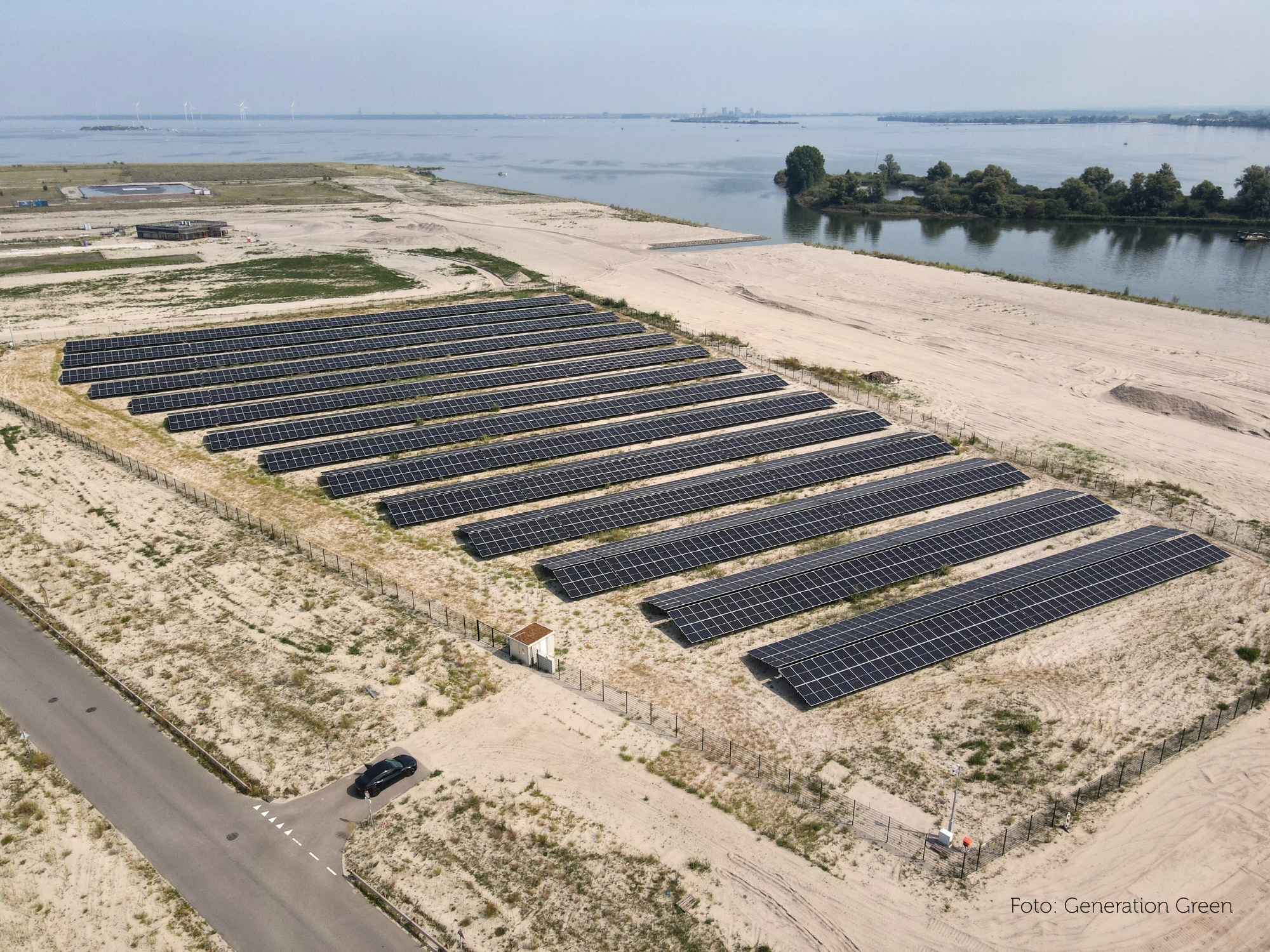
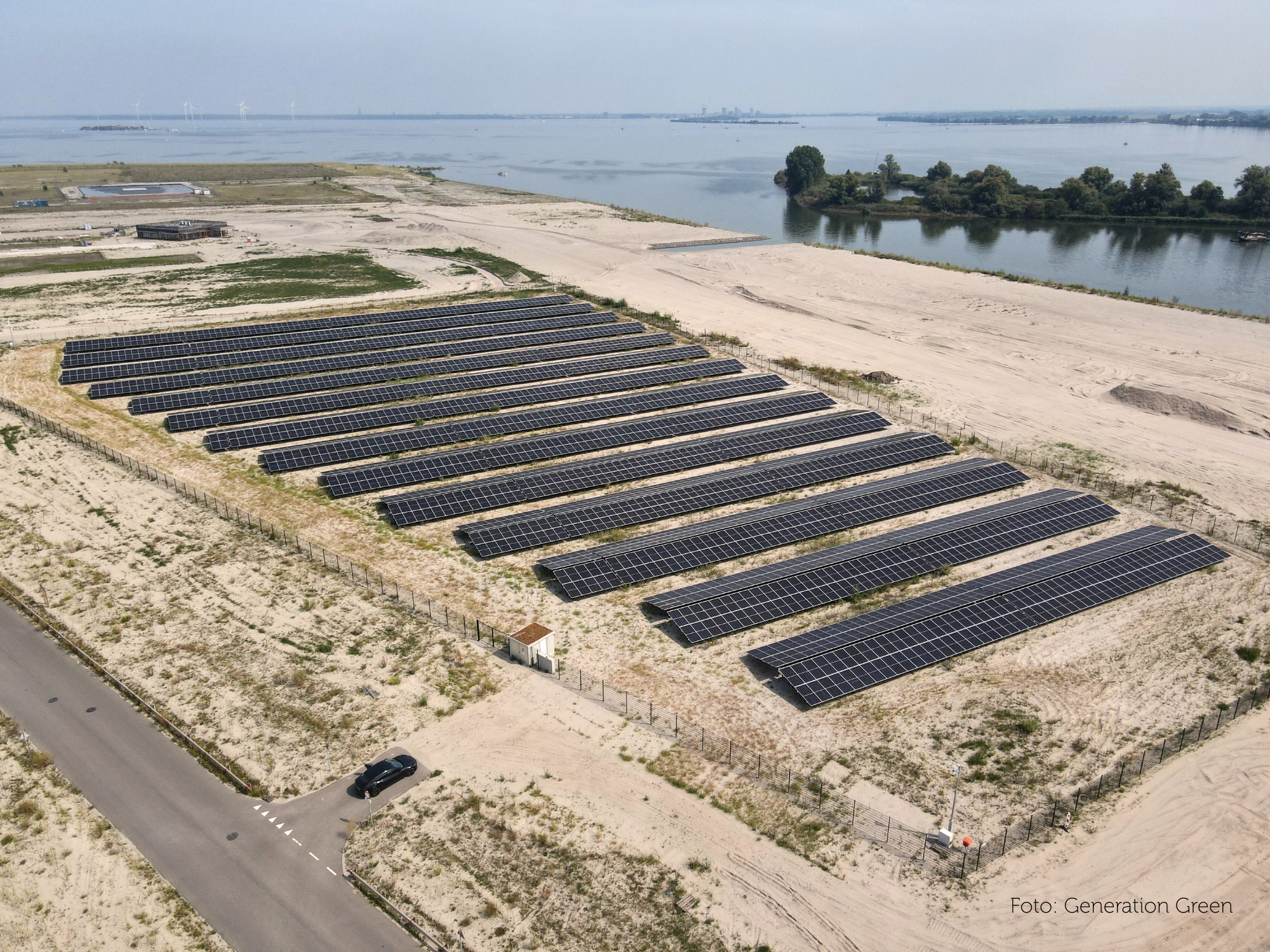
Amsterdam, 22 September – The solar farm on Strandeiland in Amsterdam is set to receive a large-scale battery system with 5.3 MWh of storage capacity and a dynamic energy management system that enables local energy sharing. With the project, energy cooperative Amsterdams GOED aims to supply locally generated solar power to the community and use flexible capacity to reduce peak loads on the congested electricity grid. The existing solar farm has a capacity of 2.5 MWp (megawatt peak) and is expected to generate approximately 2.1 million kWh annually, comparable to the annual electricity consumption of around 729 households.
The solar farm is owned by Amsterdams GOED, an energy cooperative with more than 800 members. The project combines battery storage with local consumption by households, organisations, charging infrastructure and other facilities on Strandeiland. The storage capacity will be divided between two battery units. The smaller unit will be used to store solar power and share it later with households and organisations in the surrounding area. The larger unit will aggregate flexible capacity, allowing the battery to be deployed through flexibility tenders to reduce peak loads on the local electricity grid.
A dynamic energy management system (D-EMS) will coordinate generation, storage and consumption. When solar generation is high, the system can charge the battery or bring forward local electricity consumption, for example through electric boilers. When solar generation is low or electricity demand is high, the stored energy can be used. This reduces the need to curtail solar generation when there is insufficient capacity on the grid.
The battery is intended to reduce local peak loads, creating capacity for charging points, a construction hub and other facilities on Strandeiland. In doing so, the project aims to help prevent grid congestion from delaying zero-emission construction. The control system is also being prepared for integration with smart charging and Vehicle-to-Grid (V2G) vehicles, which can feed electricity back into the grid when demand is high.
Musetta van Wetsingh, initiator of Amsterdams GOED, says: “Generating renewable energy locally is no longer enough. We also need to be able to store and share energy locally. This allows households with solar panels to make their electricity available to households without solar panels, while keeping the value within the community.”
The Sharing Group (TSG), the group behind sharing-focused companies such as Mijndomein, MyWheels and EnergyZero, will connect the battery to its People’s Power Plant: a digital energy network in which solar panels, stationary batteries, charging points and electric vehicles are managed collectively. TSG is also issuing bonds that allow individual investors to contribute to financing the further expansion of this network, including the development on Strandeiland.
Henri de Jong, founder and CEO of The Sharing Group, says: “The value of this battery lies in how it works together with the rest of the local energy system. By managing generation, storage, charging and Vehicle-to-Grid as one integrated system, we can make better use of renewable electricity while simultaneously creating capacity on a congested grid.”
Amsterdam residents can join the Amsterdams GOED cooperative and become co-owners of local energy projects. The net proceeds from these projects are reinvested in social initiatives in Amsterdam, including initiatives aimed at tackling energy poverty and inequality of opportunity.
The investment in the battery system is made possible in part by the Amsterdam Climate & Energy Fund (AKEF) and The Sharing Group. The project will also receive €600,000 in funding through Kansen voor West, financed by the European Regional Development Fund and co-financing from the Dutch government.
Casper Heijsteeg of the Amsterdam Climate & Energy Fund says: “We support this project because it connects local energy supply and demand. The benefits go beyond CO₂ reductions and a more stable energy system; they also contribute to tackling energy poverty and inequality of opportunity.”
Amsterdams GOED is an energy cooperative of residents from Amsterdam and Weesp and is part of the nationwide citizen movement GOED (Groen Opwekken en Delen – Green Energy Generation and Sharing). Since its foundation in 2019, GOED has used the energy transition as a means to tackle inequality of opportunity and energy poverty. The movement has approximately 2,000 members nationwide and around 8 MWp of renewable energy generation projects on rooftops and residual sites either operational or under development. All net proceeds benefit social causes.
The Sharing Group is a rapidly growing family of technology companies focused on ‘Good Sharing’ concepts. The Sharing Group makes sharing products and services sustainable and frictionless, with profit and well-being going hand in hand. Its focus is on the online, energy and mobility markets. Well-known brands in its portfolio include Mijndomein, MyWheels and EnergyZero.
The Amsterdam Climate & Energy Fund was established by the City of Amsterdam in 2013 and is managed by e3 Partners. The fund invests in projects that align with the City of Amsterdam’s Climate Neutral Roadmap and Circular Strategy. Since its establishment, the fund has invested more than €90 million in 40 projects.