
5,000 electric shared cars could provide more than half of Utrecht's grid flexibility needs from mobility
V2G vehicles in Utrecht fed 163 MWh back into the grid in just one quarter; MyWheels calls for supportive policies to enable further expansion
Amsterdam, 16 November 2026 – A fleet of 5,000 electric shared cars equipped with Vehicle-to-Grid (V2G) technology could provide an estimated 28 to 45 megawatts (MW) of flexibility to the electricity grid in the province of Utrecht. This means electric shared cars could meet more than half of the province's required grid flexibility from mobility. These findings are based on calculations by MyWheels, which will be presented today at the National Sustainable Mobility Conference organised by the Dutch Ministry of Infrastructure and Water Management. The potential is supported by real-world results: between 1 April and 8 July 2026, 430 V2G vehicles in Utrecht collectively fed 163 megawatt-hours (MWh) of electricity back into the grid. At the same time, MyWheels emphasises that additional policy incentives are needed to enable the planned expansion.
Utrecht's electricity grid is under significant pressure. To tackle grid congestion, the province is estimated to need 320 MW of flexible capacity by 2033, of which 80 MW must come from mobility. Electric shared cars can help meet this demand by feeding electricity back into the grid during peak hours and delaying charging until electricity demand is lower.
According to MyWheels' calculations, a fleet of 5,000 V2G-enabled shared cars could provide approximately 28 MW of flexibility based on current performance. With further optimisation of electricity fed back into the grid, this could theoretically increase to 45 MW. This represents 35 to 56 percent of Utrecht's required grid flexibility from mobility.
"With electric shared cars, we can address two major societal challenges at the same time: grid congestion and pressure on public space," says Laurens van de Vijver, CEO of MyWheels. "The results in Utrecht show that cars can do more than just consume electricity. They can also play an active role in the energy system. However, the clear benefits to society are not yet sufficiently reflected in a financially viable business case for providers. If we want to implement this on a larger scale, supportive policy measures are essential. We need the government to help us take the next step, moving from successful real-world applications to a long-term solution for grid congestion that also accelerates the transition to sustainable mobility."
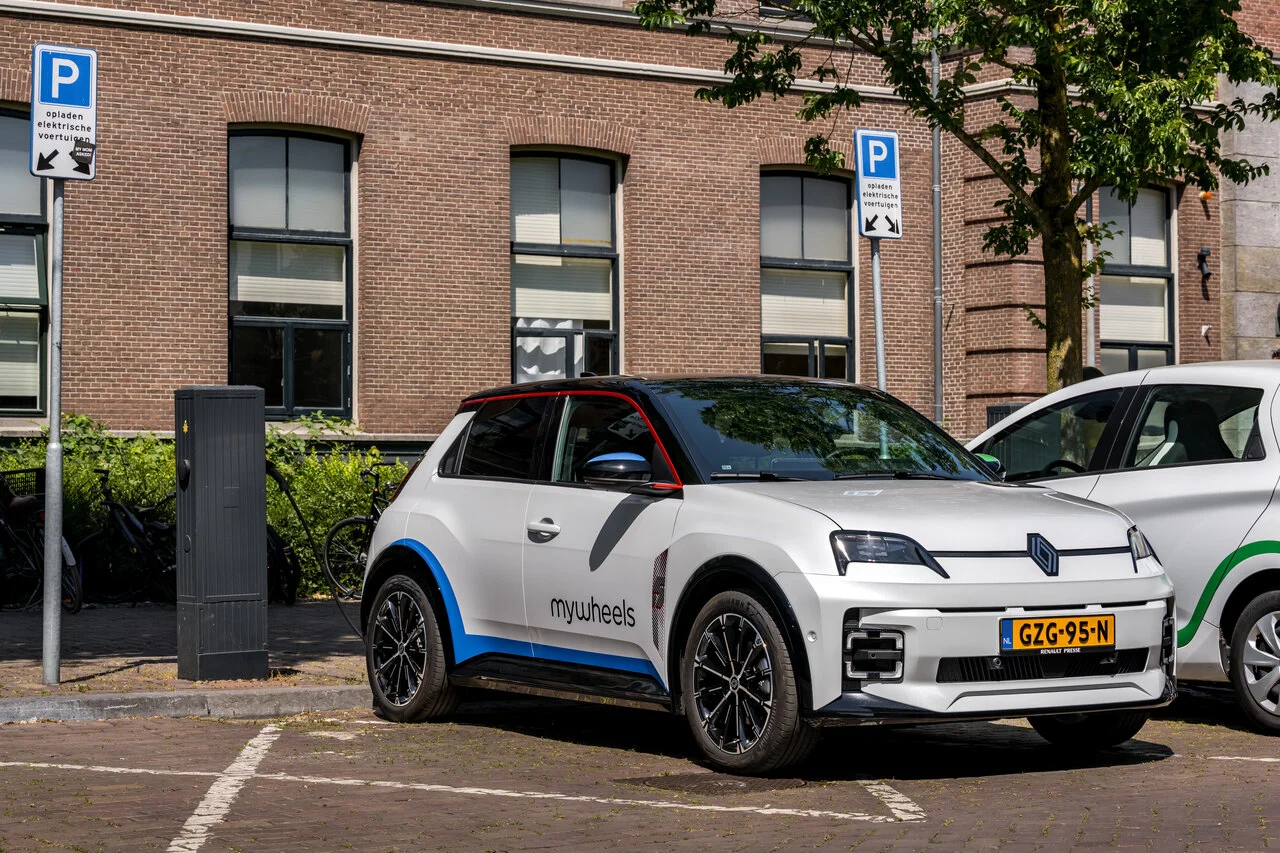
The potential of V2G is already being demonstrated in practice. In June 2025, the Utrecht Energized project was launched in Utrecht as a collaboration between Renault Group, We Drive Solar, MyWheels and the Municipality of Utrecht. The project introduced the first fully operational V2G system using shared cars in a European city.
Just over a year later, 430 V2G vehicles were connected to the system in Utrecht, including 306 electric shared cars and 124 privately owned vehicles. Between 1 April and 8 July 2026, these vehicles collectively fed 163 MWh of electricity back into the grid. Of this total, 102 MWh came from shared cars and 61 MWh from privately owned vehicles.
During the measurement period, the combined fleet achieved an average feed-in capacity of 1.4 MW over two consecutive hours at its best-performing moment, enough to cover the evening peak electricity demand of 700 households. Over the same period, the amount of power fed back into the grid increased significantly faster than the number of active vehicles. Further optimisation of the system's control mechanisms should help ensure that electricity is fed back into the grid more effectively when demand is highest.
Despite the benefits to society, operating V2G-enabled shared cars remains financially challenging. MyWheels is therefore calling on the government to introduce targeted incentives. These include reducing the VAT rate on shared mobility from 21 to 9 percent, exempting electric shared cars from motor vehicle tax and preventing double taxation on electricity used for bidirectional charging.